

Expert Witness Services for Car & Motor Vehicle Accidents in Australia
Expert Witness Services for Motor Vehicle Accidents & Road Safety Litigation in Australia
Every road project carries an inherent responsibility: ensuring that the people who use the finished product – drivers, cyclists, pedestrians, motorcyclists and public transport passengers – can do so safely. A road safety audit is the formal, independent process that makes this possible. It identifies potential safety issues before they become real-world crashes, saving lives, reducing trauma and protecting the organisations responsible for our road network.
At RSA Road Safety Audits, we provide independent road safety audits for local councils, state government agencies and private infrastructure developers across Australia. Our accredited road safety auditors bring decades of combined experience to every project – from small intersection upgrades in regional Victoria to major motorway developments in New South Wales and beyond.
This page explains what a road safety audit involves, when one is required, how the process works and why choosing the right road safety consultant matters.
Expert Witness Services for Motor Vehicle Accidents
RSA’s legal expert witness practice focuses specifically on the road infrastructure dimension of motor vehicle accident litigation. Where a crash involves a question about road design, signage, line marking, sight distance, barriers, lighting, surface condition, or any other physical characteristic of the road environment, our engineers provide the independent technical analysis that courts and legal teams require.
Our expert witnesses are accredited road safety auditors with senior-level credentials under the Austroads framework. They bring direct experience across thousands of road safety audits on projects ranging from suburban local roads to multi-billion dollar freeway infrastructure — the same environments where serious accidents occur.
What Does a Car Accident Expert Witness Do?
A car accident expert witness provides the court with an independent, technically informed opinion on matters that fall outside the knowledge of a judge or jury. In road safety litigation, that typically means assessing whether the road environment met applicable design standards and safety expectations at the time of the crash.
RSA’s expert witnesses undertake a structured five-stage methodology:
- Site investigation — Attending the crash location to assess road geometry, sight lines, surface condition, signage, line marking, barriers, and other physical features relevant to the crash.
- Standards compliance review — Examining whether the infrastructure complied with the relevant design standards, Austroads guidelines, and jurisdiction-specific requirements in force at the time.
- Human factors analysis — Assessing road user behaviour in context: what a reasonable driver, cyclist, or pedestrian could be expected to perceive, anticipate, and respond to given the road environment.
- Expert report preparation — Producing a detailed written report that may include crash reconstruction data, technical drawings, photographic evidence, and referenced standards. Reports are prepared to comply with court expert witness requirements in the relevant jurisdiction.
- Courtroom testimony — Providing oral evidence, responding to cross-examination, and where appropriate participating in concurrent evidence (hot tub) proceedings.
Our Road Safety Engineering Credentials
RSA was founded in 1994 and has operated continuously as Australia’s longest-running specialist road safety auditing firm. Our expert witnesses hold senior-level accreditation as road safety auditors under the Austroads framework and are registered with multiple state road authority panels including Transport for NSW, DTP Victoria, and TMR Queensland.
Raj Muthusamy — Director & Principal Expert Witness Raj has over 30 years of experience in road design, traffic engineering, and road safety auditing. He has led audits on landmark infrastructure including the West Gate Tunnel, Parramatta Light Rail, and Cross River Rail. As a specialist in safety barrier systems and Safe System design methodology, Raj regularly prepares expert reports and provides testimony in civil liability matters involving fatal and serious injury crashes.
Peter Harris — Principal & Expert Witness Peter has approximately 20 years of experience, including a career background as a traffic engineering and road safety professional with VicRoads. He prepares dozens of expert legal reports annually across a range of matter types and road environments.
Our expert witnesses maintain current knowledge of the Austroads Guide to Road Safety, state-specific guidelines across all Australian jurisdictions, and evolving case law relevant to road authority duty of care.
Types of Cases We Support
RSA provides expert witness services across a broad range of motor vehicle accident matter types. Our engineers have been engaged in cases involving:
Car and light vehicle accidents Intersection crashes, loss-of-control events on curves, rear-end collisions in roadworks zones, and accidents involving inadequate warning signage or delineation. We assess whether road geometry, sight distance, speed environment, or signage contributed to the crash.
Heavy vehicle and truck collisions Crashes involving articulated vehicles, B-doubles, and other heavy transport on state highways and freight routes. We analyse pavement conditions, gradient management, overtaking sight distances, and roadside hazard clearance.
Pedestrian and cyclist incidents Crashes at pedestrian crossings, shared paths, and footpath-road interfaces. We assess compliance with DDA accessibility standards, TGSI placement, crossing geometry, and the adequacy of separation between vulnerable road users and vehicles.
Motorcycle accidents Single-vehicle and multi-vehicle crashes involving motorcyclists, including loss-of-control on curves, intersection visibility failures, and inadequate safety barrier treatment in high-risk locations.
Car park and private road accidents RSA regularly provides expert analysis for accidents occurring in car parks, loading docks, private access roads, and other off-road environments where road-like standards apply. Our risk assessment work in logistics, retail, and commercial settings gives us direct technical grounding in these environments.
Post-construction and maintenance defect claims Matters where the claim involves whether a road authority or contractor failed to maintain the road to a safe standard — including pavement defects, line marking deterioration, vegetation obscuring sight lines, and barrier condition.
How We Work With Legal Teams — From Crash Site Assessment to Court Testimony
We understand that litigation moves to its own timeline and that instructing solicitors need reliable, responsive expert support. Our approach is designed to integrate smoothly with your matter management process.
Early engagement and preliminary opinion We can provide a preliminary desktop review of crash circumstances before a full site investigation, helping your team assess the merits of the infrastructure dimension of a claim before committing to full expert engagement.
Site inspections and evidence preservation Where road conditions are subject to change — due to roadworks, maintenance, or seasonal variation — early site inspection is critical. RSA can mobilise quickly to preserve photographic and measurement evidence of the road environment as it existed at the time of the crash, or as close to it as practicable.
Report preparation to court standards Our expert reports are prepared to comply with the expert witness codes of conduct applicable in the relevant jurisdiction — including the Uniform Civil Procedure Rules in NSW, the Civil Procedure Act in Victoria, and equivalent requirements in Queensland and other states. We document our reasoning clearly, reference applicable standards, and distinguish factual findings from expert opinion.
Joint expert conferences Where courts direct joint conferences between opposing experts, RSA participates constructively and prepares joint statements that accurately reflect areas of agreement and disagreement, narrowing the issues for hearing.
Concurrent evidence Our experts are experienced in concurrent evidence (hot tub) proceedings and can present their analysis effectively in that format.
Expert Witness Services Across Australia
RSA’s expert witnesses are engaged in matters across all Australian states and territories. Our accreditation covers all jurisdictions, and our project work gives us direct knowledge of the road environments, design standards, and road authority practices in each state.
We are regularly engaged in matters involving road environments in:
- Melbourne and metropolitan Victoria — freeways, arterial roads, local streets, tram corridors, and cycling infrastructure
- Regional Victoria — highways, rural roads, and state-managed routes including the Princes Highway, Western Ring Road, and regional freight corridors
- Sydney and NSW — state roads, local government roads, and complex urban environments
- Queensland — including regional centres such as Rockhampton, Mount Isa, Charters Towers, and Emerald, where we hold active impressions for expert witness-related queries
- South Australia and Western Australia — where RSA has completed audits on major state infrastructure projects
- ACT and Tasmania — available for engagement with appropriate lead time
Where a matter involves a remote or regional road environment, our engineers are experienced in travelling to site and working with local knowledge of road conditions and traffic patterns specific to that region.
The Safe System Approach in Accident Reconstruction
The Safe System is the internationally recognised framework for road safety that underpins Australian road design standards and state road authority policy. At its core, the Safe System acknowledges that human error is inevitable — and that the road environment must be designed to prevent errors from resulting in fatal or serious injury crashes.
In litigation, the Safe System framework provides a powerful analytical lens for assessing whether a road authority or designer discharged their duty of care. Where a crash involved a run-off-road event, a head-on collision, a side-impact at an intersection, or a conflict with a vulnerable road user, RSA’s experts assess:
- Whether the road design managed the exposure of road users to crash risk at that location
- Whether the physical environment reduced the likelihood that a foreseeable error would lead to a crash
- Whether roadside treatments — barriers, clear zones, forgiving kerbs — reduced the severity of injury if a crash did occur
This approach aligns directly with the duty of care analysis that courts apply in road infrastructure negligence matters, and allows our expert witnesses to present technically credible, legally coherent opinions.
Frequently Asked Questions About Road Safety Expert Witnesses
What qualifications should a road safety expert witness have?
A road safety expert witness in an infrastructure negligence matter should hold accreditation as a road safety auditor under the Austroads framework, with senior-level credentials (Level 3 in NSW, equivalent in other states). They should have direct experience conducting audits on the type of road environment relevant to the matter — not merely general engineering experience.
Can RSA act for both plaintiffs and defendants?
Yes. RSA’s expert witnesses are engaged by both plaintiff and defendant legal teams. Our obligation is to the court, not to the party that instructs us, and our opinions are formed independently of the litigation outcome.
How early should I engage an expert witness in a road safety matter?
As early as practicable. Early engagement allows us to inspect the road environment before conditions change, advise on whether the infrastructure dimension of the claim has merit, and help your team understand the technical issues before pleadings are finalised.
Do you provide reports for coronial inquests as well as civil litigation?
Yes. RSA’s experts have provided reports and testimony in coronial matters involving road deaths, in addition to civil liability proceedings.
Legal Considerations in Expert Witness Testimony
Expert witnesses must adhere to strict legal and ethical standards when providing testimony. The role of an expert is not to advocate for one side but to present an unbiased opinion based on their expertise.
Key legal principles governing expert witnesses include:
- Independence and Objectivity
- Experts must provide impartial analysis, free from influence by the hiring legal firm.
- Courts expect expert opinions to be based on facts, evidence, and professional judgement, rather than aligning with a particular argument.
- Duty to the Court
- In Australia, expert witnesses are bound by court rules, such as the Federal Court of Australia’s Expert Evidence Practice Note and similar state-based guidelines.
- The expert’s primary duty is to assist the court rather than to advocate for the party that engaged them.
- Admissibility of Expert Evidence
- Courts evaluate whether expert evidence is relevant, reliable, and based on sound methodology.
- The Daubert test (used in some jurisdictions) and Australian common law principles assess whether an expert’s opinion is scientifically valid and applicable to the case.
- Cross-Examination and Challenges
- Opposing counsel may attempt to discredit an expert witness’s findings by questioning methodology, qualifications, or potential biases.
- An effective expert witness must present a well-reasoned, evidence-backed argument that withstands scrutiny.
Case Study: The Impact of Expert Witness Testimony in Road Safety Cases
Example: A Fatal Pedestrian Crash in an Urban Environment
Background: A pedestrian was fatally struck while crossing a multi-lane arterial road at night. The plaintiff legal firm engaged RSA to determine whether road design deficiencies contributed to the crash.
RSA’s Investigation:
- Conducted an on-site assessment and identified insufficient street lighting and poorly placed pedestrian crossings as contributing factors.
- Reviewed local speed limits, traffic volumes, and historical crash data, revealing multiple previous pedestrian incidents at the same location.
- Analysed Safe System Principles, showing that lower speed limits, additional signage, and improved lighting could have significantly reduced the risk of fatal injury.
Outcome:
RSA’s expert report and testimony demonstrated that the road authority had failed to provide a safe pedestrian environment, contributing to the crash. The case resulted in a favourable outcome for the plaintiff, leading to both compensation for the victim’s family and safety improvements at the site.
The Growing Demand for Expert Witnesses in Road Safety Cases
As road safety and liability issues become more prominent, expert witnesses in transport engineering are increasingly sought after for legal matters. Key factors driving demand include:
- Greater Public Awareness of Road Safety – Increased scrutiny on government agencies and road authorities regarding their responsibility to maintain safe infrastructure.
- Advancements in Road Safety Science – More sophisticated risk assessment methodologies are providing stronger evidence in legal disputes.
- Safe System Principles Adoption – Courts are considering whether roads align with best-practice safety designs when determining liability.
With dozens of expert legal assignments undertaken each year, RSA continues to play a vital role in helping legal firms seek justice for road crash victims by providing technical expertise, independent analysis, and expert courtroom testimony.
The role of an expert witness in traffic and transport legal cases is critical in determining whether road network deficiencies contributed to serious or fatal crashes. RSA’s work in this field involves detailed infrastructure assessments, compliance reviews, and expert testimony, helping legal teams present strong, evidence-based cases.
By applying engineering expertise, road safety principles, and rigorous legal standards, RSA contributes to safer road networks and improved legal outcomes for crash victims and their families.
For legal firms seeking expert legal advice in road network injury cases, RSA provides independent, industry-leading expertise to support successful legal claims.
Case Studies
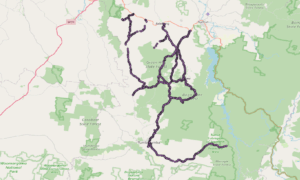
Dilapidation Surveys – Wagga Wagga & Snowy Valleys Councils (UGL / CPB Contractors)
RSA was engaged by UGL and CPB Contractors to complete a pre-construction dilapidation survey of 571 km of local roads
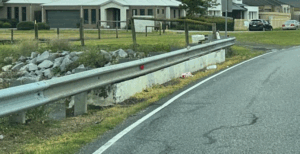
Safety Barrier Condition and Compliance Assessment – City of Casey
Project Overview RSA was engaged to carry out a comprehensive Safety Barrier Condition and Compliance Assessment across the entire road
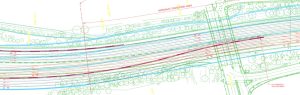
North East Link, Victoria
At project initiation with staging layout designs, RSA analysed broad key safety issues