
Road Safety Audits
Road Safety Audits Australia – Independent Auditing by Accredited Road Safety Auditors
Every road user deserves to arrive home safely. A ‘road safety audit’ is one of the most effective tools available to identify and address potential hazards before they contribute to crashes, injuries or fatalities. At RSA Road Safety Audits, our accredited road safety auditors deliver independent, evidence-based auditing across Victoria, New South Wales and nationally – helping councils, government agencies and infrastructure companies meet their duty-of-care obligations and build safer road networks for all Australians.
Whether you’re planning a new intersection, upgrading a shared-use path or reviewing an existing stretch of road following community concern, a properly conducted road safety audit provides the rigorous, independent assessment you need to make informed decisions and demonstrate due diligence.
What Is a Road Safety Audit?
A road safety audit is a formal, independent examination of a road project or existing road environment by a qualified team of road safety auditors. The purpose is to identify features that could contribute to crashes or worsen their severity, and to provide recommendations for treatment before construction is completed or while there is still an opportunity to make cost-effective changes.
Road safety audits are governed in Australia by the Austroads Guide to Road Safety Part 6: Road Safety Audit, now in its sixth edition. Each state supplements this with its own jurisdiction-specific guidelines and auditor accreditation requirements.
The audit process is independent — the audit team operates separately from the design team and reports directly on safety issues without being constrained by design decisions already made. This independence is fundamental to the audit’s value: it ensures the findings reflect genuine safety concerns rather than a review of work by the people who produced it.
Road safety audits are applicable to all road-like environments, not just public roads. RSA conducts audits on car parks, freight centres, logistics facilities, airports, ports, mining sites, and any other environment where vehicles and pedestrians interact.
Key characteristics of a road safety audit include:
- Independence – the audit team must be independent of the design or project team to ensure objectivity.
- Formal process – audits follow established guidelines such as Austroads Guide to Road Safety Part 6: Managing Road Safety Audits, and relevant state guidelines.
- Proactive focus – the aim is to prevent crashes, not simply respond to crash history.
- Multidisciplinary assessment – experienced auditors consider human factors, vehicle dynamics, road geometry, signage, lighting, drainage and more.
A road safety audit is not a check of compliance with design standards. Rather, it applies professional road safety experience to ask a fundamental question: ‘could this road environment contribute to a crash, and if so, how can the risk be reduced?’
When Is a Road Safety Audit Required in Australia?
The requirement to undertake road safety audits varies by jurisdiction, project type and funding source. However, the practice is strongly embedded in Australian road management frameworks.
Victoria
In Victoria, the Road Management Act 2004 places a duty on road authorities – including local councils and the Department of Transport and Planning – to inspect, maintain and manage their road networks in a manner that is reasonably safe for all users. While the Act does not explicitly mandate road safety audits for every project, undertaking audits is widely recognised as best practice and a key component of demonstrating that a road authority has met its duty of care.
VicRoads (now part of the Department of Transport and Planning) has historically required road safety audits for projects on declared arterial roads, and many local councils incorporate audit requirements into their own road management plans.
New South Wales
Transport for NSW (TfNSW) requires road safety audits for projects on state roads and encourages their use on local roads. The TfNSW guidelines align closely with the Austroads framework and set out clear expectations for auditor accreditation, audit stages and reporting.
A road safety audit in NSW typically follows the same five-stage model used nationally, with state-specific supplementary guidance on auditor qualifications and report format.
National and Austroads Guidelines
The Austroads Guide to Road Safety Part 6 provides the overarching national framework for managing road safety audits in Australia and New Zealand. It defines the audit stages, outlines roles and responsibilities for audit teams and project managers, and sets expectations for how audit findings should be addressed.
For projects funded through federal programs – such as the Black Spot Program or Roads to Recovery – a road safety audit is frequently a condition of funding approval.
The Five Stages of a Road Safety Audit
Road safety audits can be conducted at any point in a project’s lifecycle. The Austroads framework identifies five distinct stages, each aligned to a project development phase. Conducting audits at multiple stages maximises the opportunity to identify and address safety issues when changes are least costly and most effective.
Stage 1: Feasibility and Planning
At this earliest stage, auditors review the project concept, feasibility studies and preliminary planning documents. The focus is on fundamental issues – route selection, access and connectivity, the relationship between land use and traffic generation, and the needs of all road user groups. Identifying hazards at this point allows for significant design changes before substantial investment has occurred.
Stage 2: Preliminary Design
The road safety audit at preliminary design stage examines draft layouts, cross-sections, intersection configurations and sight distance provisions. Auditors assess whether the proposed design adequately accommodates the expected mix of road users, traffic volumes and vehicle types. This is often the most cost-effective stage for resolving safety concerns.
Stage 3: Detailed Design
At detailed design, auditors review the near-final plans including signage, line marking, lighting, drainage, landscaping and roadside furniture. The audit considers how these elements interact and whether the design communicates clearly to road users – particularly at decision points such as intersections, merges and lane transitions.
Stage 4: Pre-Opening (Road Ready)
Conducted after construction but before the road is opened to traffic, the pre-opening audit involves a physical inspection of the completed works. Auditors assess whether the constructed outcome matches the design intent, whether temporary works have been properly removed, and whether the road environment functions safely under real-world conditions – including night-time visibility.
Stage 5: Post-Opening
Typically conducted three to twelve months after opening, the post-opening road safety audit evaluates how the road is performing in practice. Auditors observe actual traffic behaviour, identify any unexpected safety issues and assess whether the road is being used as intended. This stage is particularly valuable for identifying issues that only emerge once real traffic patterns are established.
Not every project requires all five stages. A road safety audit consultant can advise on the most appropriate audit scope based on the project’s scale, complexity and risk profile.
Who Can Conduct a Road Safety Audit? (Accredited Road Safety Auditors)
A road safety audit must be conducted by a qualified and accredited road safety auditor. This is not simply a matter of professional courtesy – it is a requirement under Austroads guidelines and most state and territory frameworks.
Accreditation Requirements
In Australia, road safety auditors are accredited through programs administered by state road authorities. The accreditation process typically requires:
- A relevant tertiary qualification in engineering or a related discipline.
- Demonstrated experience in road safety, traffic engineering or road design.
- Successful completion of a recognised road safety audit training course.
- Evidence of ongoing professional development in road safety.
- Satisfactory performance as a team member on supervised audits before leading audits independently.
Accreditation is maintained through ongoing audit activity and continued professional development. It is not a one-off qualification – auditors must demonstrate that they remain current and competent.
Audit Team Composition
For most road safety audits, the audit team comprises a minimum of two people: a senior auditor (team leader) and an assisting auditor. The team leader must hold current accreditation and takes responsibility for the audit findings and report. For larger or more complex projects, additional team members with specialist expertise – such as in pedestrian safety, cycling infrastructure or heavy vehicle operations – may be included.
Independence
A critical requirement is that the audit team is independent of the project’s design, construction and management teams. This ensures objectivity and allows the auditors to identify issues without the influence of design decisions, budget pressures or project timelines.
At RSA Road Safety Audits, all of our road safety auditors hold current accreditation and bring decades of combined experience across road safety, traffic engineering and infrastructure planning.
Road Safety Audits for Local Councils and Government Agencies
Local councils and government agencies are among the most frequent commissioners of road safety audits – and for good reason. As road authorities, they carry significant legal and ethical responsibilities for the safety of their road networks.
Duty of Care and Legal Obligations
Under the Road Management Act 2004 (Vic) and equivalent legislation in other states, road authorities have a duty to manage their road networks in a manner that is safe for all users. A well-documented road safety audit provides evidence that a council or agency has taken proactive steps to identify and address potential hazards.
In the event of a serious crash, the existence (or absence) of a road safety audit can be a significant factor in determining whether a road authority met its duty of care. Audits create a formal record of identified risks, recommended treatments and the road authority’s response – which can be critical in legal proceedings or coronial inquiries.
Common Triggers for Council Road Safety Audits
Councils typically commission road safety audits in response to:
- New developments – subdivisions, shopping centres and schools that generate new traffic movements.
- Infrastructure upgrades – intersection modifications, roundabout installations, shared path construction.
- Community concerns – resident complaints about speeding, near-misses or unsafe pedestrian crossings.
- Crash history – a cluster of crashes at a particular location prompting a formal assessment.
- Grant funding requirements – programs such as Black Spot or TAC-funded works that require an audit as a condition of funding.
- Road management plan compliance – proactive audit programs embedded in council road management plans.
What Councils Receive
Following a road safety audit, the council receives a formal report that includes:
- A description of the project or road environment audited.
- The audit methodology and conditions (including day and night inspections).
- Identified safety issues, each described with supporting photographs and analysis.
- Risk ratings for each finding.
- Recommended corrective actions.
The council’s project manager is then required to formally respond to each finding, either accepting the recommendation, proposing an alternative treatment or providing a documented justification for not acting.
Road Safety Audit vs Safe System Assessment – What’s the Difference?
While both road safety audits and safe system assessments aim to improve road safety, they serve different purposes and follow different methodologies.
A road safety audit is a formal, staged assessment of a specific road project or existing road. It identifies potential safety issues and recommends treatments, following the Austroads audit framework. It is typically triggered by a project milestone or a specific concern.
A safe system assessment, on the other hand, applies the principles of the Safe System framework – which underpins Australia’s National Road Safety Strategy – to evaluate whether a road environment aligns with the goal of eliminating fatal and serious injury crashes. It considers the interaction between safe roads, safe speeds, safe vehicles and safe road users, and takes a broader, more strategic view of risk.
In practice, the two approaches are complementary. A road safety audit may identify specific hazards (such as a sight distance deficiency at an intersection), while a safe system assessment evaluates whether the overall road environment is forgiving enough to prevent a serious outcome if a crash occurs.
RSA Road Safety Audits provides both services. If you’re unsure which approach is appropriate for your project, our team can advise on the most suitable methodology based on your objectives, project stage and regulatory requirements. Learn more about our safe system assessment services.
Why Commission a Road Safety Audit This Winter
Winter presents unique challenges for road safety across Australia – particularly in Victoria and southern New South Wales, where reduced daylight hours, wet roads, fog and frost significantly alter the road environment.
Commissioning a road safety audit during the winter months offers several practical advantages:
- Realistic worst-case assessment – auditors can observe the road environment under genuinely challenging conditions, including wet-weather drainage performance, fog-affected sight lines and reduced visibility at dusk and dawn.
- Night inspections in working hours – with sunset as early as 5:15 pm in Melbourne during June and July, night-time audit inspections can be conducted during standard working hours, reducing costs and logistical complexity.
- Identifying seasonal hazards – issues such as ponding water, leaf litter accumulation on shared paths, glare from low sun angles and inadequate delineation in fog are best identified when they are actually present.
- Proactive preparation – completing an audit now allows findings to be addressed before summer, when road usage – particularly by cyclists and pedestrians – typically increases.
Winter audits are particularly valuable for councils and road authorities managing roads in hilly terrain, rural areas prone to fog or regions with significant rainfall. If your project involves a shared-use path, school zone or intersection with known wet-weather concerns, a winter audit provides the most robust and informative assessment.
RSA Road Safety Audits – Our Approach and Experience
RSA Road Safety Audits is an independent road safety audit consultant practice based in Melbourne, providing auditing and consulting services across Victoria, New South Wales and nationally.
Our Accredited Team
Our auditors hold current accreditation and bring extensive experience across all five audit stages. We have conducted hundreds of road safety audits for local councils, state road authorities, transport agencies and private infrastructure developers. Our team’s experience spans:
- Arterial road and intersection upgrades.
- Roundabout design and safety assessments.
- Shared-use path and cycling infrastructure projects.
- School zone and pedestrian safety reviews.
- Rural road safety assessments.
- Major transport corridor projects.
Our Process
Every RSA road safety audit follows a consistent, rigorous methodology:
- Scoping and briefing – we work with your project manager to understand the project context, define the audit scope and confirm the appropriate audit stage.
- Desktop review – our team reviews all relevant documentation, including design plans, traffic data, crash history and previous audit reports.
- Site inspection – we conduct thorough day and night inspections, assessing the road environment from the perspective of all road user groups.
- Analysis and reporting – we prepare a comprehensive audit report with clearly described findings, risk ratings, supporting photographs and practical recommendations.
- Follow-up – we are available to discuss findings with your project team and provide clarification or additional advice as needed.
Independence and Objectivity
As an independent practice, RSA Road Safety Audits has no involvement in road design, construction or project management. This ensures that our audit findings are entirely objective and free from any conflict of interest – a fundamental requirement of the Austroads audit framework.
Frequently Asked Questions
How long does a road safety audit take?
The duration depends on the project’s scale and complexity. A straightforward intersection audit may be completed within one to two weeks, while a large-scale corridor audit may require three to four weeks. We provide an estimated timeline at the scoping stage.
How much does a road safety audit cost?
Costs vary depending on the audit stage, project complexity and site location. We provide transparent, fixed-fee quotes so you know exactly what to expect before committing. Contact us for a no-obligation quote.
Can you audit existing roads, or only new projects?
Both. Road safety audits can be conducted on existing roads (sometimes called road safety reviews or Stage 5 audits), as well as on new projects at any stage from feasibility through to post-opening.
Do you conduct road safety audits outside Victoria?
Yes. While our practice is based in Melbourne, we regularly conduct road safety audits in NSW and other states. Our auditors hold relevant accreditation for interstate work.
What happens after the audit?
Following the audit, we provide a formal report to the client’s nominated project manager. The project manager is responsible for preparing a formal response to each finding, in accordance with the Austroads corrective action process. We are available to discuss findings and provide advice on treatment options.
Is a road safety audit a legal requirement?
There is no blanket legislative requirement for road safety audits in Australia. However, audits are required or strongly recommended under many funding programs, state road authority policies and local council road management plans. They are also widely regarded as best practice for demonstrating duty of care.
Get a Quote for Your Road Safety Audit
Whether you’re a local council planning an intersection upgrade, a government agency delivering a major corridor project, or an infrastructure company seeking independent assurance, RSA Road Safety Audits can help.
Request a no-obligation road safety audit quote – contact RSA’s accredited auditors today.
Case Studies
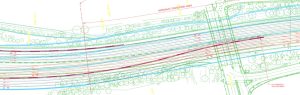
North East Link, Victoria
At project initiation with staging layout designs, RSA analysed broad key safety issues
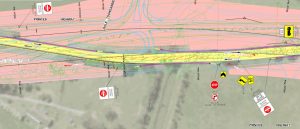
Princes Highway Duplication, Kilmany, Victoria
As part of the 12km Stage 3 duplication of Princes Highway East (Traralgon to Sale), RSA carried out desktop and
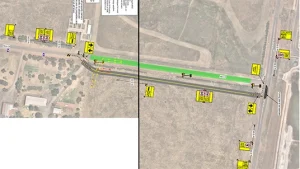
Taylors Road Upgrade, Bonnie Brook, Victoria
New or upgraded roads in existing or growth areas generate the need for road safety audits of plans and staging